
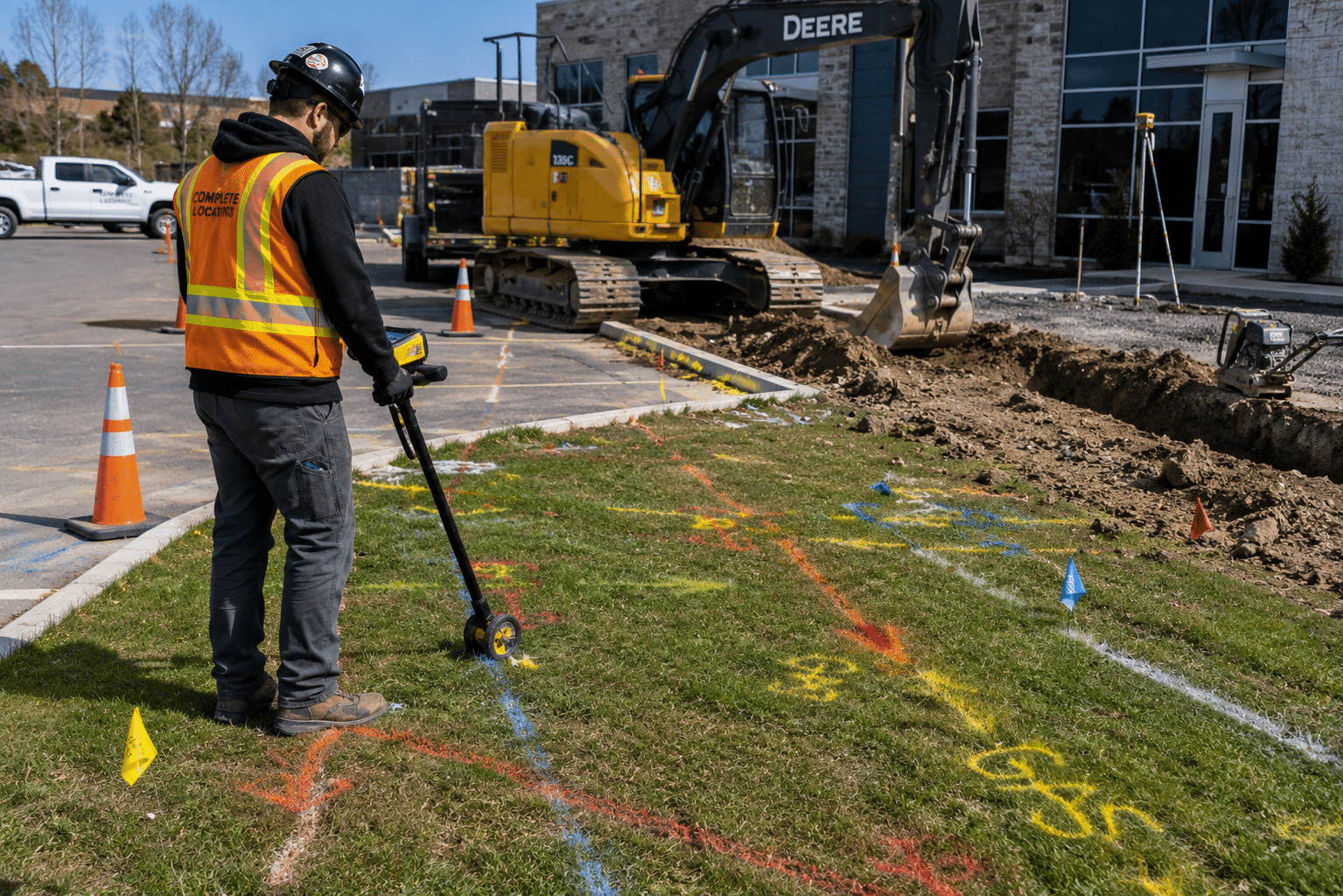
Every excavation project starts with a plan, but successful excavation also depends on understanding what lies below the surface. While many contractors are familiar with public utility locates, excavation on private property often involves underground infrastructure that is privately owned and may not be identified through standard public locating services.
From commercial developments to parking lot improvements, contractors across Southern Ontario routinely schedule private utility locates before excavation begins. Identifying buried utilities during the planning stage helps project teams coordinate work more efficiently, reduce unexpected delays, and make informed decisions before trenching or excavation equipment arrives on site.
Why Some Projects Require More Than Public Utility Locates
Public utility locates are an essential part of excavation planning, but they generally identify utility infrastructure owned by public utility providers up to the property line. Once work moves onto private property, additional underground infrastructure may exist that is the responsibility of the property owner.
These privately owned systems can include:
- Electrical service laterals
- Water service lines
- Sewer laterals
- Communication cables
- Irrigation systems
- Site lighting circuits
- Private gas lines
- Other underground infrastructure
Many commercial properties have also undergone renovations, additions, or utility upgrades over the years. Existing drawings may no longer reflect current site conditions, making private utility locating services an important part of excavation planning.
Rather than relying on assumptions, contractors can verify underground conditions before excavation begins and coordinate work with greater confidence.
Project 1: Commercial Building Additions
Commercial additions often require excavation for foundations, utility servicing, drainage, and site connections. Whether expanding an office, warehouse, retail building, or industrial facility, excavation typically occurs close to existing underground services.
Private utility locates help contractors identify buried infrastructure before excavation equipment begins digging near the existing building.
By understanding where underground utilities are located, project managers can:
- Finalize excavation layouts
- Coordinate utility connections
- Schedule foundation work efficiently
- Reduce field changes during construction
This early planning supports smoother project coordination while allowing multiple trades to work according to schedule.
Project 2: Parking Lot Expansions
Parking lot reconstruction and expansion projects involve much more than pavement removal. Contractors frequently install new drainage systems, lighting, communication conduits, landscape irrigation, and utility services beneath the finished surface.
These projects often encounter privately owned underground infrastructure serving adjacent buildings or site features.
Private utility locating allows contractors to verify existing utilities before excavation begins for:
- Storm drainage improvements
- Catch basin installation
- Parking lot lighting
- Electric vehicle charging infrastructure
- New site servicing
- Underground communication lines
With accurate locating information available early, excavation crews can adjust layouts before work begins instead of making costly changes after trenching has started.
Project 3: Electrical Service Trenching
Electrical upgrades remain one of the most common reasons contractors perform trenching on commercial properties.
Whether installing new service entrances, connecting detached buildings, upgrading transformers, or extending power to equipment, electrical trenching frequently crosses areas containing existing underground utilities.
Private underground utility locating helps contractors identify buried infrastructure along proposed trench routes before excavation begins.
This information allows electricians and excavation contractors to coordinate installations with fewer interruptions while improving overall project planning.
Some electrical projects also require conduit installations through existing concrete slabs. In these situations, combining private locating with Concrete Scanning helps identify embedded conduit, reinforcing steel, and post-tension cables before cutting or coring takes place.
Project 4: Water and Sewer Service Work
Water and sewer service installations frequently involve excavation around existing underground infrastructure.
Commercial renovations, tenant improvements, municipal service upgrades, and new site servicing often require contractors to install or replace underground water and sewer connections.
Private utility locates provide valuable information before excavation begins by identifying existing service laterals and underground utilities that could affect trench alignments.
This allows contractors to:
- Plan excavation routes
- Coordinate plumbing installations
- Reduce unexpected utility conflicts
- Improve scheduling between excavation and mechanical trades
Because many underground systems occupy shared utility corridors, understanding existing conditions helps projects progress more efficiently from the beginning.
Project 5: Landscape and Hardscape Installations
Landscape construction often involves more excavation than many people realize.
Commercial landscape contractors regularly install:
- Retaining walls
- Decorative stone features
- Irrigation systems
- Site lighting
- Signage foundations
- Fence posts
- Walkways
- Tree planting areas
Although excavation depths may vary, underground utilities can exist throughout landscaped portions of commercial properties.
Scheduling private utility locates before excavation helps contractors confirm utility locations before installing new landscape features, reducing the need for adjustments once construction is underway.
This planning also benefits property managers coordinating multiple contractors during larger site improvement projects.
Supporting Better Excavation Planning
Every excavation project involves coordination between contractors, consultants, and property owners. Having reliable information about underground infrastructure before work begins allows project teams to sequence work more effectively.
Private utility locating supports excavation planning by helping contractors:
- Confirm underground utility locations
- Plan trench alignments
- Coordinate multiple trades
- Reduce scheduling disruptions
- Improve overall project efficiency
Many commercial developments combine private locating with broader Utility Locates to develop a more complete understanding of underground infrastructure across the site.
Where projects include modifications to existing buildings, Ground Penetrating Radar can also be incorporated into the planning process to identify subsurface conditions within concrete slabs before cutting or coring begins.
Using these services together gives contractors better visibility into underground conditions both inside and outside commercial structures.
Why Contractors Schedule Private Utility Locates Before Excavation
Experienced contractors know that efficient excavation starts with accurate information. Private utility locates have become a routine part of pre-excavation planning because they provide greater visibility into underground infrastructure that public utility locates may not identify.
Whether the project involves a commercial building addition, parking lot expansion, electrical trenching, water service installation, or landscape construction, understanding existing underground conditions helps contractors make informed decisions before excavation begins.
Across Southern Ontario, incorporating private utility locating into project planning supports better coordination, more efficient scheduling, and smoother project execution from the first excavation through final completion.
Request private utility locates before your next excavation or trenching project. To discuss your project requirements or schedule a locate, visit the Contact Us page.
