
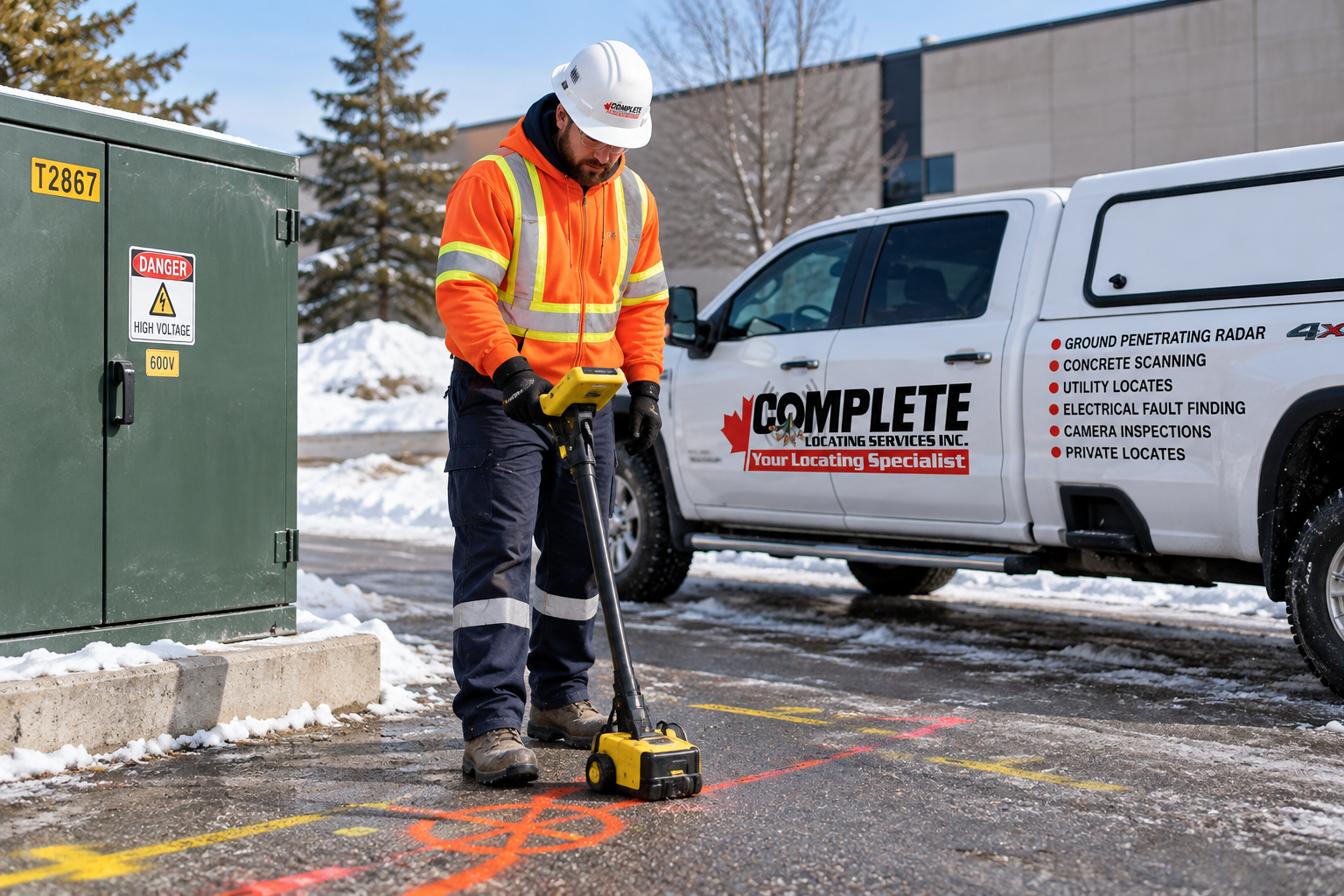
When an Underground Electrical Problem Becomes a Locating Problem
An underground electrical problem can quickly create uncertainty on a commercial or industrial site. A contractor may have clear signs that a buried cable is damaged or failing, but knowing a problem exists does not necessarily show where the repair crew should investigate.
The suspected cable may run beneath a parking lot, driveway, landscaped area, industrial yard, or other developed part of the property. Without a more precise fault location, contractors can be left working with a large potential search area.
This is where underground electrical fault finding becomes useful. Specialized electrical fault finding services can help narrow down the location of a suspected underground cable problem so contractors can make better-informed decisions about excavation and repair planning.
For contractors in London, the practical objective is straightforward. Identify the likely problem area before committing labour, equipment, and excavation resources to a repair.
Why Excavating the Suspected Area Is Not a Precise Repair Plan
Knowing the approximate route of an underground electrical cable is different from knowing where a fault is located. A cable route can extend across a significant portion of a property, while the actual fault may be confined to a relatively small section.
Excavating based only on the general cable route can create unnecessary disruption. On an active commercial or industrial property, that disruption may affect parking spaces, vehicle access, loading areas, landscaping, pedestrian routes, or normal site operations.
Electrical fault locating in London, Ontario helps contractors move from a general understanding of the cable route toward a more focused area for investigation. That information can make it easier to determine where excavation or other repair work should begin.
This distinction is especially important when site drawings are incomplete, conditions have changed since installation, or the exact problem location is not apparent from the surface. Fault finding provides another source of field information that contractors can use when planning their response.
How Electrical Fault Finding Narrows the Repair Area
Underground electrical fault finding uses purpose-specific methods to investigate a suspected cable problem. The objective is not to complete the electrical repair. Instead, fault-location work helps establish where along the underground cable the suspected problem is located.
The investigation depends on professional locating equipment designed for underground locating and related field applications. The equipment and investigation process allow the locating technician to gather information that would not otherwise be visible from the surface.
This can be valuable when a contractor knows which cable or circuit is involved but still needs to determine where to focus the physical repair work. Narrowing the suspected fault area can reduce the amount of ground that needs to be treated as a possible excavation zone.
The resulting location information supports the next stage of the contractor’s work. It does not replace electrical diagnosis, excavation planning, safe work procedures, or the repair itself, but it can provide a more useful starting point for those activities.
Where London Contractors Encounter Underground Cable Problems
Underground electrical cables are used throughout commercial, industrial, institutional, and multi-building properties. As a result, suspected cable faults can arise in several familiar contractor scenarios.
A commercial property may have buried electrical infrastructure supplying exterior lighting or other site equipment. An industrial facility may have underground feeds running between buildings, equipment areas, or other parts of the property. Parking areas and larger developed sites can also contain electrical infrastructure that crosses significant distances underground.
When a suspected problem occurs in these environments, simply knowing the general route may not provide enough information to plan a targeted repair. Commercial electrical fault locating helps narrow the investigation before the appropriate electrical contractor proceeds with repair work.
Clear field information is also useful when several parties are involved. Locating results and documentation can support communication between electrical contractors, general contractors, facility managers, property managers, and others responsible for coordinating the work.
Fault Finding and Utility Locating Are Related but Different Jobs
Electrical fault finding and utility locating both involve underground infrastructure, but they serve different purposes. Understanding that distinction can prevent confusion when contractors are preparing for excavation.
Fault finding focuses on identifying the likely location of a problem within an underground electrical cable. Utility locating focuses on identifying the position or route of existing buried infrastructure so it can be considered before ground disturbance takes place.
For example, a contractor may use underground electrical fault finding to narrow down where a damaged cable is suspected. Before excavation begins in that area, utility locates in London may be required to establish what other underground infrastructure is present nearby.
The two types of locating work therefore support different parts of the same broader project. One helps answer where the suspected electrical fault is located. The other helps establish what buried infrastructure needs to be considered when accessing that area.
Keeping those functions separate helps contractors plan work based on the actual site conditions rather than assuming that identifying a cable route automatically identifies the location of the fault.
Locate First, Then Plan the Repair
Once the suspected fault area has been narrowed down, the repair contractor can use that information to plan the next steps. The location of the suspected problem, site access, surrounding infrastructure, surface conditions, and excavation requirements can all affect how the repair is approached.
Before disturbing the ground, utility locating services can help identify surrounding underground infrastructure that needs to be considered during the work. This is an important distinction from the fault investigation itself and helps provide additional information for excavation planning.
A locate-first approach can help contractors avoid treating a long underground cable route as one large potential repair area. Instead, the suspected fault can be narrowed down, nearby infrastructure can be identified, and the appropriate contractor can develop a more targeted plan for excavation and repair.
Complete Locating’s role in this process is focused on fault location and investigation rather than electrical repair. For contractors, facility managers, and property managers dealing with a suspected buried cable problem, that location information can help turn an uncertain underground issue into a more defined repair area.
Contact Complete Locating to investigate and locate a suspected underground electrical fault in London.
