
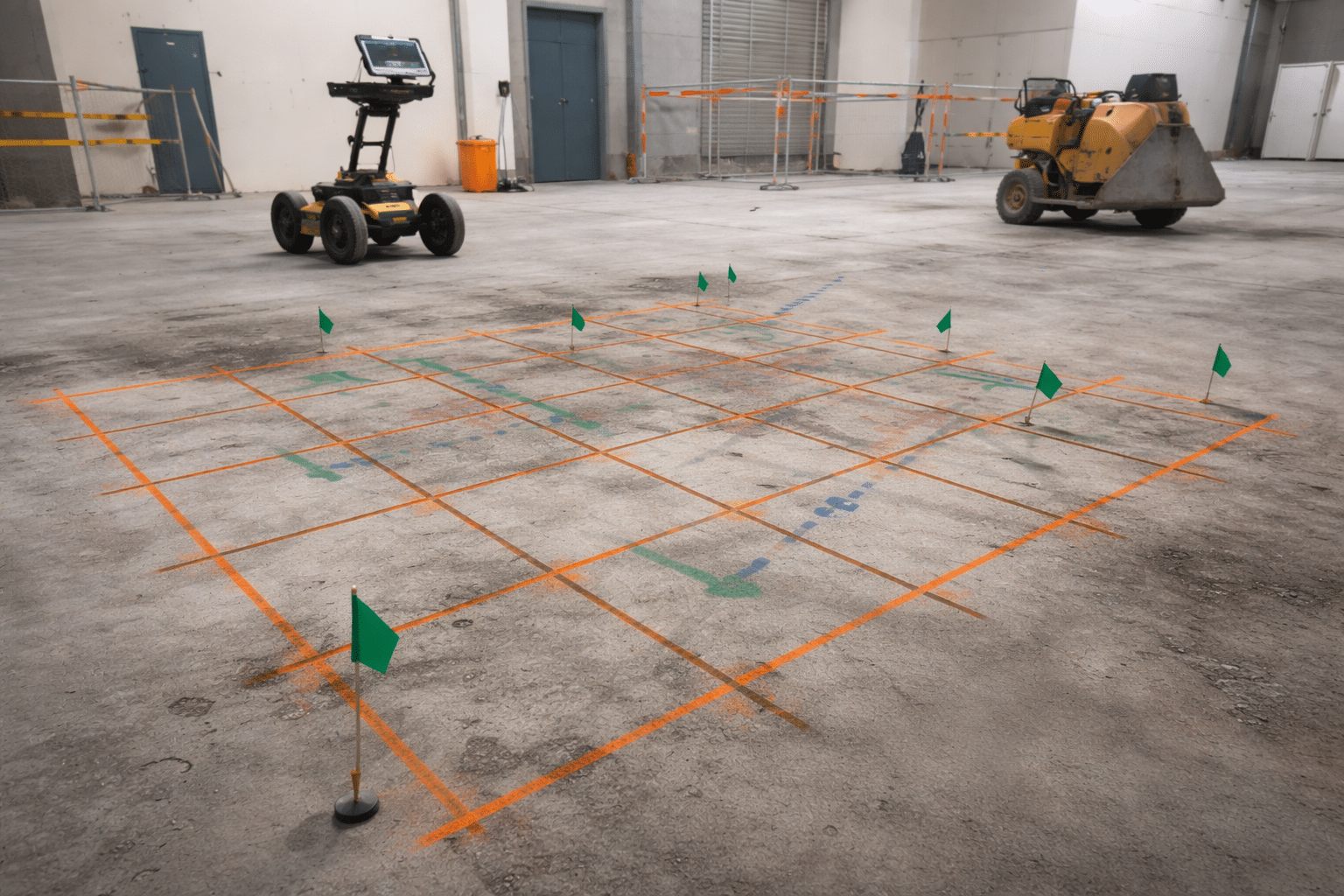
London contractors run into the same problem during slab work. The plan calls for saw cutting or coring, but the slab hides infrastructure that was installed long after the original drawings were created. Electrical conduit, post-tension cables, or abandoned lines can sit directly in the cutting path.
That is why many crews now schedule concrete scanning services before cutting or drilling into commercial slabs. Concrete scanning London contractors rely on helps identify hidden infrastructure so cutting crews can work with more certainty.
The slab cutting scenario London contractors recognize
A common situation happens during tenant improvement construction. A warehouse space needs plumbing added, or a new electrical trench across the floor.
The concrete cutting crew arrives ready for slab cutting or concrete coring London contractors perform every day. But before work starts, the contractor needs confirmation that nothing critical runs through the slab.
Commercial buildings often change use over time. New conduit gets installed, electrical conduit in slabs gets abandoned, and additional services are sometimes installed without updated drawings.
In many buildings across London, Ontario, the original construction documents only show the infrastructure that existed when the building was first built. Years later, equipment installations, tenant upgrades, and interior renovations may have added new systems below the slab surface.
This is where ground penetrating radar scanning becomes part of the workflow for many London contractors.
What is commonly embedded in commercial slabs
Commercial concrete slabs rarely contain only concrete and rebar. Many buildings include multiple layers of subsurface infrastructure that developed over the life of the building.
Concrete scanning in London Ontario regularly detects items such as:
- Electrical conduit installed during past tenant upgrades
- Embedded conduit feeding machinery or production equipment
- Post-tension cables used in structural slab systems
- Private utility lines running beneath interior floor areas
- Drain piping and plumbing lines serving added washrooms or floor drains
In warehouse and manufacturing facilities, electrical conduit in slabs is particularly common. Equipment lines are sometimes installed directly into the slab to keep power feeds protected and out of the way of operations.
Post-tension cables are another important element that must be identified before slab cutting begins. These cables are under tension and form part of the structural system of the building.
Over time, warehouse slab modifications and tenant improvements add infrastructure that later contractors cannot see. Without slab scanning London contractors risk cutting into systems that are still active.
Why contractors scan before saw cutting or coring
Concrete scanning London contractors schedule before slab cutting because unexpected infrastructure can quickly disrupt the work schedule.
Saw cutting through embedded conduit may require electricians to isolate and repair damaged lines. Hitting a post-tension cable can stop work entirely until structural assessments are completed.
Even when the infrastructure is inactive, cutting through unknown materials slows crews down and increases wear on equipment.
Using GPR scanning services allows contractors to perform pre-cut slab verification. Ground penetrating radar sends signals through the slab and detects objects beneath the surface.
The scanning technician then marks the slab surface to show where infrastructure exists. Contractors can adjust their saw cutting lines, trench routes, or coring locations before work begins.
For projects involving concrete coring London contractors often request scanning around the proposed core locations. This helps confirm that the drilling path will not intersect conduit, reinforcing steel, or tension cables.
This small step during project preparation often prevents much larger delays during construction.
Where private infrastructure can exist beneath slabs
Another reason concrete scanning London contractors request before slab work is that private utility lines are extremely common inside commercial properties.
Interior slabs may contain:
- Electrical feeds installed during equipment upgrades
- Communications conduit connecting control rooms or offices
- Drain piping installed beneath warehouse floors
- Tenant-installed electrical or data systems
These systems are considered private infrastructure. That means they typically are not included in municipal locating programs.
Because of this, contractors performing slab modifications often combine slab scanning with private utility locating services when planning their work.
Private locates help identify underground systems on privately owned property, including infrastructure that runs beneath buildings, parking areas, or loading zones.
When projects involve both interior slab cutting and exterior excavation, contractors frequently coordinate this work alongside London utility locating services to ensure all underground infrastructure is accounted for.
This approach allows contractors to plan trench routes, core locations, and cutting paths with better information.
A quick example from a slab modification project
A contractor performing commercial floor trenching in a London warehouse planned a trench across the slab for new plumbing lines serving a tenant upgrade.
The trench would run across the building floor between two mechanical areas. The contractor scheduled concrete scanning London technicians before saw cutting began.
During the scanning process, ground penetrating radar detected a continuous line running directly across the planned trench path. The markings indicated an embedded conduit that was not shown on the project drawings.
Because the conduit was identified early, the contractor shifted the trench alignment slightly to avoid it. The adjustment required only a minor layout change before cutting started.
If the conduit had been struck during slab cutting, electricians would likely have been required to isolate the circuit and perform repairs. That could have delayed the plumbing installation and slowed other trades working in the space.
Instead, the scanning allowed the cutting crew to proceed with a clear plan.
How scanning helps crews keep slab work on schedule
Concrete scanning London contractors rely on gives crews a clearer picture of what is inside the slab before equipment starts cutting.
Rather than relying on outdated drawings or assumptions, contractors can confirm actual subsurface conditions. This helps them avoid unexpected infrastructure that can disrupt saw cutting or coring operations.
For projects involving tenant fit-outs, warehouse slab modifications, commercial floor trenching, or plumbing core installations, scanning often becomes a routine preparation step.
By identifying embedded conduit, post-tension cables, and private utility lines ahead of time, contractors can plan their work more efficiently and avoid costly interruptions.
For contractors planning slab cutting or coring work, it is often helpful to contact a concrete scanning specialist before the cutting schedule begins.
Scheduling concrete scanning before your next slab cutting or coring project in London helps crews verify subsurface conditions and keep construction moving.
