
London contractors working on tenant fit-outs know that slab work is rarely as simple as it looks on paper. Renovation plans may call for trenching, coring, or cutting through a floor, but the actual slab conditions often reflect years of previous changes.
That is why many crews schedule concrete scanning services before starting interior work. Concrete scanning London contractors rely on helps confirm what is inside the slab before cutting begins, especially in buildings that have seen multiple tenant turnovers.
The tenant fit-out scenario London contractors recognize
Tenant fit-outs often involve retail build-outs, office renovations, or warehouse conversions. These projects typically require modifications to existing slabs to accommodate new plumbing, electrical, or mechanical systems.
A contractor may need to cut a trench for new drain lines, core through the slab for electrical feeds, or open sections of the floor for mechanical upgrades. While drawings provide a starting point, they rarely reflect every change made over the life of the building.
In London, Ontario, many commercial properties have undergone multiple renovation cycles. Each tenant may have installed infrastructure to support their operations, often without removing previous systems.
Because of this, concrete scanning London contractors schedule has become a routine part of pre-construction planning for tenant fit-outs.
What changes beneath slabs during tenant improvements
Commercial renovations leave behind a layered history beneath the slab. Each phase of work can introduce new embedded systems while older ones remain in place.
Concrete scanning in London Ontario frequently identifies:
- Electrical conduit added during past retail or office upgrades
- Embedded conduit feeding lighting systems, workstations, or equipment
- Private utility lines installed for tenant-specific operations
- Drain lines added during plumbing upgrades or layout changes
- Abandoned systems left behind after previous renovations
Retail build-outs often involve multiple electrical changes to support lighting and displays. Office renovations typically add communications and data lines. Warehouse conversions may introduce equipment feeds or floor-based service connections.
Over time, these systems overlap. What appears to be a standard slab may contain multiple layers of embedded conduit and infrastructure.
Without slab scanning London contractors risk cutting into systems that are still active or structurally important.
Why contractors scan before slab modifications
Concrete scanning London contractors use before tenant fit-outs helps reduce uncertainty during construction.
Cutting into unknown infrastructure can disrupt multiple trades at once. Electricians may need to isolate systems. Plumbers may need to reroute lines. Other trades may be delayed while issues are resolved.
Tenant fit-outs often operate on tight timelines. Even minor disruptions can affect occupancy schedules and project coordination.
To avoid these issues, contractors rely on ground penetrating radar scanning to detect embedded objects within the slab.
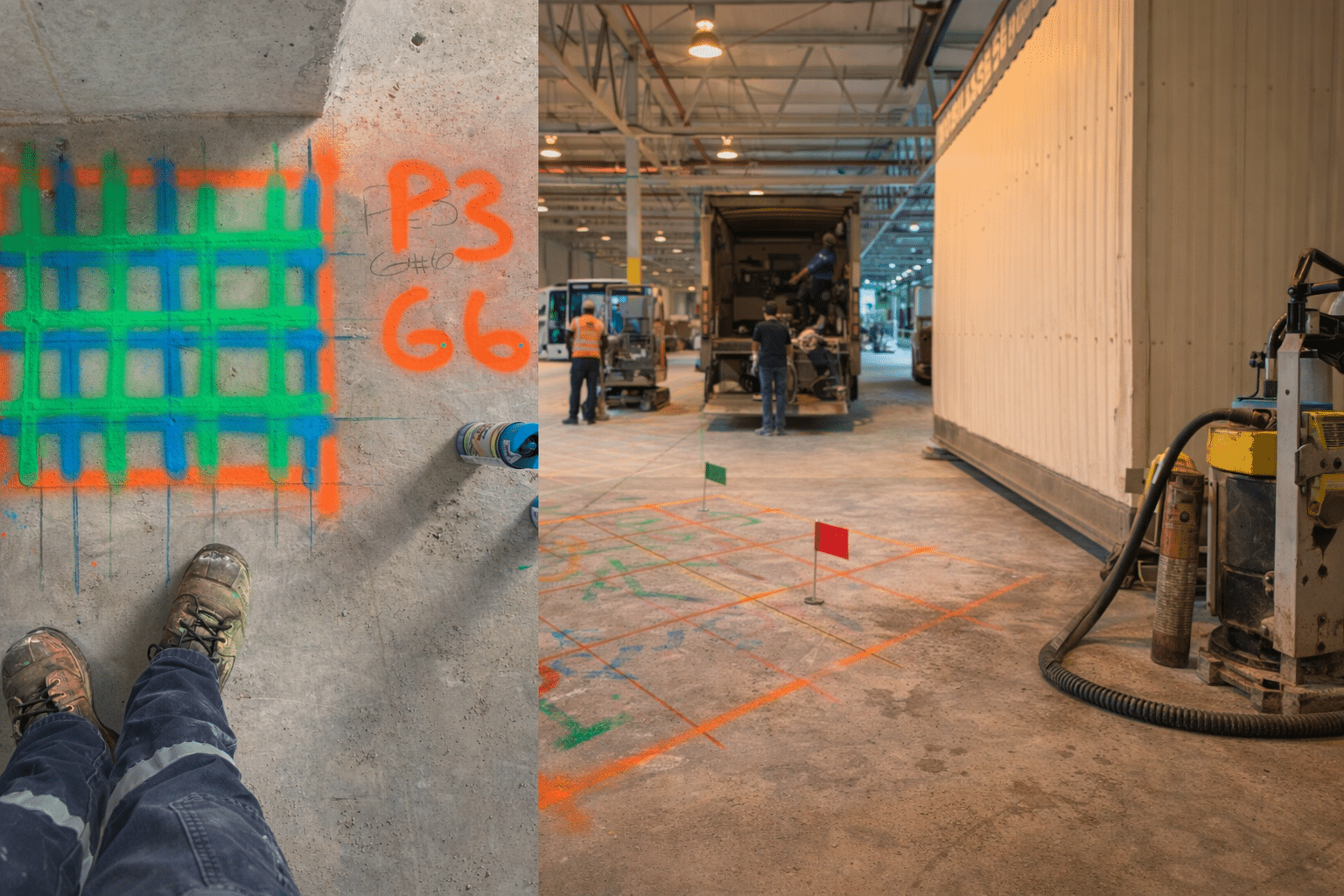
GPR scanning identifies conduit, reinforcing steel, and post-tension cables. The results are marked directly on the slab surface so crews can see where infrastructure exists before cutting begins.
This allows contractors to adjust trench paths, relocate core holes, and plan cuts around confirmed subsurface conditions.
Where private infrastructure creates risk during renovations
Private utility lines are a major factor during tenant fit-outs. These systems are installed to support specific tenant needs and are rarely included in public locating records.
Contractors frequently encounter private infrastructure in:
- Retail spaces with legacy power feeds for displays and signage
- Office environments with multiple generations of data and communication lines
- Warehouse floors with embedded electrical connections for machinery
- Areas where previous interior trenching has occurred
Because these systems are privately installed, contractors often coordinate with private utility locating services before beginning slab modifications.
Private locates help identify underground infrastructure that extends beyond the slab or connects different parts of the building.
For projects that include exterior work or tie-ins, contractors may also rely on London utility locating services to verify municipal infrastructure outside the building.
This combined approach ensures that both interior and exterior systems are accounted for.
Coordination between trades during fit-outs
Tenant fit-outs involve multiple trades working in the same space, often on overlapping schedules. Electrical, plumbing, mechanical, and flooring crews all depend on slab modifications being completed accurately.
Concrete scanning London contractors schedule early helps coordinate this work more effectively.
When slab conditions are verified in advance, each trade can plan with better information. Core locations can be confirmed. Trench routes can be adjusted. Conflicts can be resolved before work begins.
This reduces rework and helps maintain sequencing between trades.
A quick example from a tenant fit-out project
A contractor in London was completing an office renovation that required several core holes through the slab for new electrical and data lines.
Before drilling began, the contractor scheduled concrete scanning London services to verify the proposed core locations.
The scan identified embedded conduit directly beneath one of the planned core points. Additional scanning revealed nearby conduit running parallel to the proposed trench route.
None of this infrastructure appeared on the renovation drawings.
Because the issue was identified early, the contractor adjusted both the core location and part of the trench layout. The changes were minor and completed during planning.
If the conduit had been struck during coring, the repair process could have delayed electrical installation and affected other trades working on the project.
How scanning supports smoother tenant fit-outs
Concrete scanning London contractors rely on provides a clear understanding of slab conditions before renovation work begins.
Instead of reacting to unexpected discoveries, crews can plan around confirmed infrastructure. This helps reduce downtime, avoid unnecessary repairs, and keep projects aligned with schedules.
For retail build-outs, office renovations, and warehouse conversions, scanning has become a practical part of pre-construction planning.
Contractors working on tenant improvements benefit from verifying subsurface conditions before committing to slab cutting or coring.
For upcoming projects, it is often beneficial to contact a concrete scanning specialist to coordinate scanning before renovation work begins.
Schedule concrete scanning before your next tenant fit-out project in London.
