
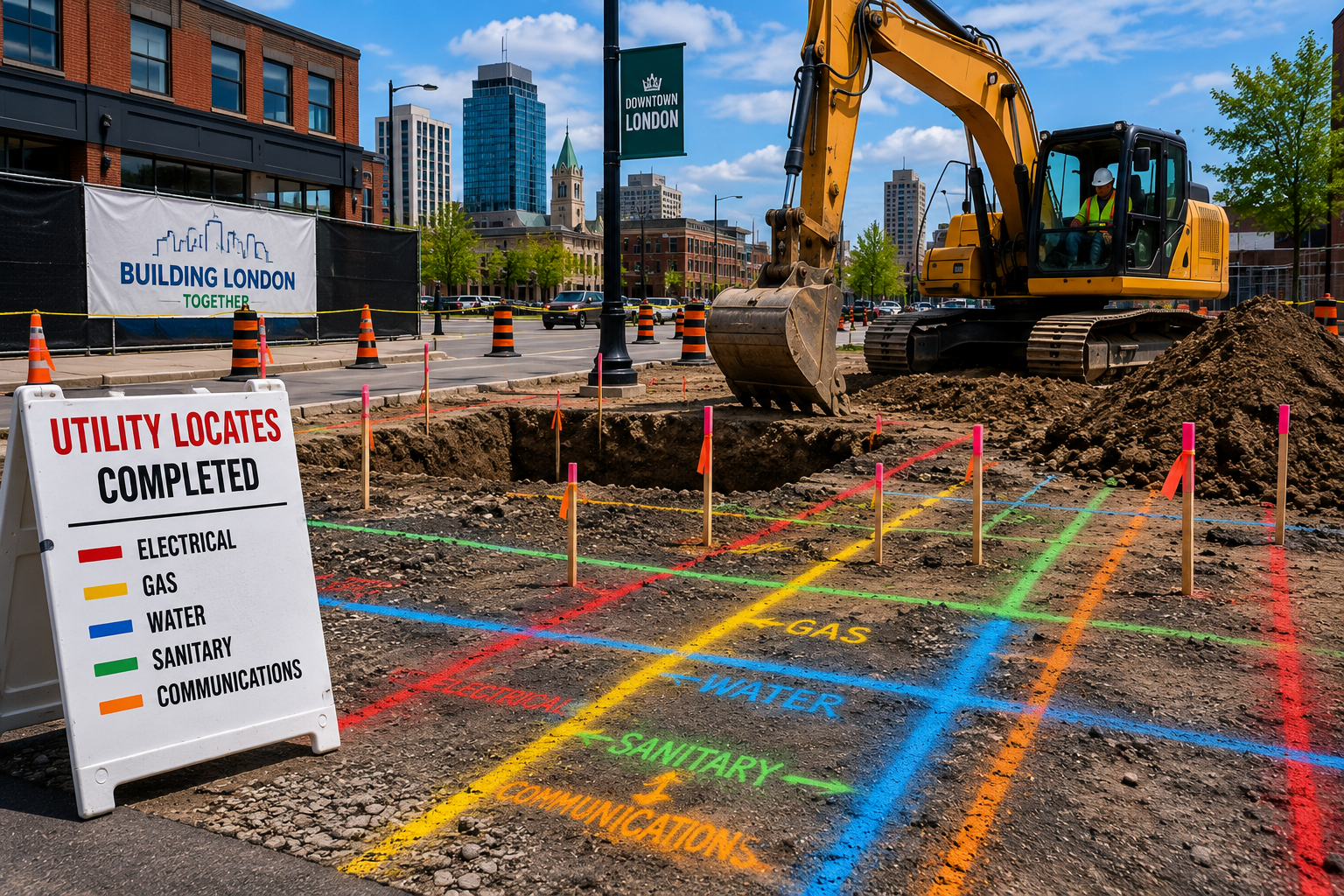
Common Excavation Mistakes That Utility Locates Can Prevent in London
Excavation projects often begin with tight schedules, multiple trades, and pressure to keep work moving. Whether the project involves trenching, site servicing, landscaping, electrical installations, or plumbing work, contractors in London know that unexpected underground conditions can quickly create delays.
Many excavation issues are not caused by the digging itself. They result from planning mistakes made before equipment ever arrives on site. Understanding these common errors can help contractors avoid disruptions, control costs, and complete projects more efficiently.
The Excavation Planning Scenario
A typical excavation project in London may involve general contractors, excavation crews, electricians, plumbers, engineers, property managers, and utility providers. Each party contributes to project planning, but excavation remains one of the highest-risk stages because underground infrastructure cannot be seen from the surface.
Site plans and historical records can provide useful information, but they do not always reflect every underground utility currently in place. Property improvements, service upgrades, tenant renovations, and undocumented installations can all affect underground conditions.
This is why many contractors make utility locates in London a standard part of project preparation before excavation begins.
By understanding what exists below ground, contractors can make better decisions regarding excavation methods, trench locations, equipment access, and project scheduling.
Mistake #1: Assuming All Utilities Are Covered
One of the most common excavation planning mistakes is assuming that every underground utility will be identified through a standard locate request.
Many contractors are surprised to learn that public utility locates typically only identify infrastructure owned by participating utility companies. Once utility ownership transfers to the property owner, those services may no longer be included within public utility markings.
This can be particularly important on:
- Commercial properties
- Industrial facilities
- Multi-unit residential developments
- Educational campuses
- Healthcare facilities
- Shopping centres
These sites often contain extensive privately owned infrastructure that serves buildings, lighting systems, communications equipment, irrigation systems, and other operations.
Without additional investigation, those utilities may remain unidentified before excavation begins. For this reason, many contractors also schedule private locates when work will occur on private property.
Understanding the distinction between public and private utility ownership helps reduce surprises during excavation.
Mistake #2: Beginning Trenching Before Verification
Project deadlines can create pressure to move quickly. However, starting trenching operations before utility information has been fully reviewed can create unnecessary complications.
Contractors sometimes receive locate information and assume excavation can proceed immediately without confirming that all required markings are present, current, and relevant to the planned work area.
Changes to site conditions, modified excavation boundaries, and recent construction activity can all affect the accuracy and completeness of available information.
Verification helps ensure that locating results align with the actual scope of work before equipment enters the excavation zone.
Taking time to confirm utility information before trenching often prevents delays later in the project when correcting issues becomes more expensive and time-consuming.
Mistake #3: Discovering Unknown Services Mid-Project
Few scenarios are more frustrating than uncovering an unexpected utility after excavation is already underway.
Unknown services can halt work, trigger redesigns, require additional locating, and create scheduling challenges for multiple trades. In some cases, contractors may need to modify excavation plans entirely to accommodate newly discovered infrastructure.
This issue is especially common on older properties throughout London where utility systems have evolved over decades.
Examples may include:
- Abandoned utility lines
- Unrecorded electrical services
- Legacy communication systems
- Previous building connections
- Unmapped drainage infrastructure
When underground conditions are uncertain, contractors often seek additional information before excavation begins. Technologies such as ground penetrating radar can provide another layer of insight into subsurface conditions and help identify potential underground features that may not appear in available records.
Identifying potential conflicts during planning is significantly more efficient than addressing them once excavation crews are already mobilized.
Mistake #4: Scheduling Locates Too Late in the Project Timeline
Another common mistake is treating utility locating as a final checklist item rather than an early planning activity.
Many excavation projects depend on multiple moving parts, including permits, inspections, subcontractors, equipment availability, and material deliveries. If utility locating is delayed until the last minute, the entire project schedule can become compressed.
Late locating requests can create challenges when:
- Additional private locating is required
- Site conditions need further investigation
- Project boundaries change
- Multiple stakeholders require review
By scheduling utility locating early, contractors gain valuable time to evaluate results and address potential issues before construction activities begin.
This proactive approach often results in smoother project execution and fewer schedule disruptions.
How Utility Locates Fit Into Planning
Successful excavation projects rely on planning, coordination, and accurate information.
Utility locating supports excavation planning by helping contractors understand underground conditions before decisions are made regarding trench routes, excavation depths, equipment placement, and work sequencing.
Rather than viewing utility locating as a standalone requirement, many contractors treat it as an essential planning tool that informs the entire excavation strategy.
When utility information is available early, project teams can identify conflicts, coordinate more effectively, and reduce uncertainty throughout the construction process.
This becomes increasingly important on larger commercial and industrial projects where underground infrastructure may be extensive and complex.
Why Contractors Schedule Locates Early
Experienced contractors understand that the earlier underground conditions are evaluated, the easier it becomes to manage project risk and maintain schedules.
Scheduling utility locates early allows project teams to:
- Review underground utility information
- Identify potential conflicts before excavation
- Coordinate with stakeholders
- Adjust project sequencing if necessary
- Plan excavation routes more effectively
- Determine whether additional locating services are required
Early planning supports better decision-making and creates opportunities to address challenges before they impact active construction.
For many contractors in London, utility locating has become a critical part of project preparation because it helps improve predictability and reduce avoidable disruptions.
Planning Excavation Projects in London
Every excavation project presents unique challenges, but many of the most common issues can be addressed before work begins through proper planning and utility locating.
Contractors who understand utility ownership, verify information before trenching, investigate uncertain conditions, and schedule locating services early are often better positioned to keep projects moving efficiently.
Book utility locates in London before your next excavation project.
For assistance with excavation planning and underground utility locating services in the region, visit the contact us page to connect with a locating specialist.
